What to expect-
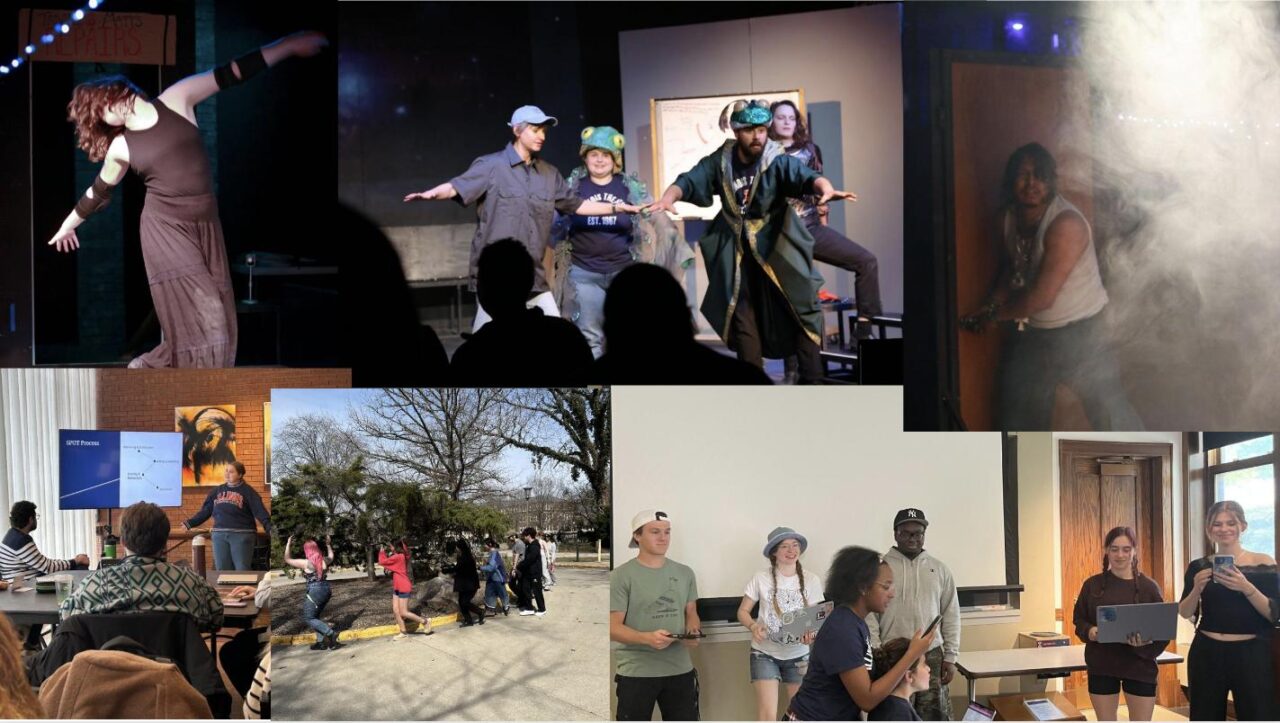
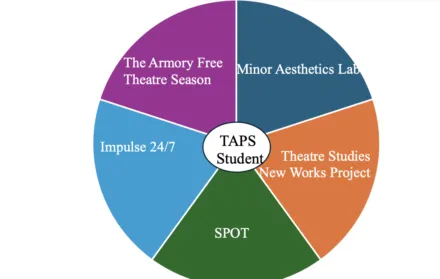
Theatre and Performance Studies students have the opportunity to explore playwriting, devised theatre, theatre and performance history, minoritarian aesthetics, queer-of-color performance, immersive theatre, playable theatre, experience design, directing, theory and criticism, arts management, social justice, themed entertainment, theatre for young audiences, experimental theatre, and dramaturgy. TAPS students regularly engage with mainstage productions as assistant dramaturgs, dramaturgs, assistants to the director, and assistant directors and have opportunities to work on student-generated performance projects. As innovators, TAPS students are expected to learn from a variety of theatre and performance contexts to create collaboratively across areas of study and practice-based experimentations.
Along with the education from a world-class university, graduating with a BFA in Theatre and Performance Studies has allowed our students to pursue careers as educators, arts administrators, directors, writers, critics, casting directors, theatre company managers and theatre company founders. As arts-based innovators, the TAPS degree translates to industries that value collaboration, invention, critical thinking, and creativity such as business, education, law, communication arts, and design. Other graduates have used their four years in Theatre and Performance Studies to hone their interest in order to pursue advanced degrees in many other areas. With its broad-based approach, Theatre and Performance Studies prepares students for their entry into the world of theatre, and into the world of the everyday.
INTERVIEW / PORTFOLIO REVIEW INFORMATION CAN BE FOUND HERE
CURRICULUM INFORMATION CAN BE FOUND HERE
For more information, please contact Thom Miller at miller64@illinois.edu.
Learn How to Apply
Minoritarian Aesthetics Minor
The Minoritarian Aesthetics undergraduate minor will provide students with a blueprint for understanding the connection between everyday life practices and acts across performance stages. The minor pays close attention to aesthetic practices across minor voices by working across media, genre, discipline, and practice-based pedagogy, and across differences from race, gender and sexuality to disability and class. Working alongside artists, scholars, pedagogues, and art building initiatives, the minor will highlight expressive cultures by moving with and across mediums such as theater, dance, music, and art to name a few.
This minor is open to students in all majors, but all minor requirements must be completed before graduation.